
The industrial demand for specialized biocatalysts has reached an all-time high. From the synthesis of complex chiral intermediates in pharmaceuticals to the degradation of plastics in environmental remediation, enzymes are the preferred choice due to their high specificity and “green” profile. However, wild-type enzymes rarely possess the robustness required for industrial settings. The solution lies in directed evolution—a process that has traditionally been hindered by the slow, iterative nature of cell-based screening. The integration of High-Throughput Cell-Free Protein Synthesis (HT-CFPS) with integrated services for enzyme directed evolution is now revolutionizing this timeline, reducing months of screening to a single week.
The Screening Bottleneck: In Vivo vs. In Vitro
Traditional enzyme evolution relies on in vivo expression, where each variant must be cloned, transformed, and cultured. This creates several “dead zones” in the research cycle: the 48-hour wait for colony growth, the risk of host toxicity, and the difficulty of standardizing expression across different clones. HT-CFPS removes the cell wall entirely, treating the ribosome as a chemical catalyst. This “open system” allows for immediate, high-throughput access to the protein product.
I. The Computational Prelude: Mining the Best Candidates
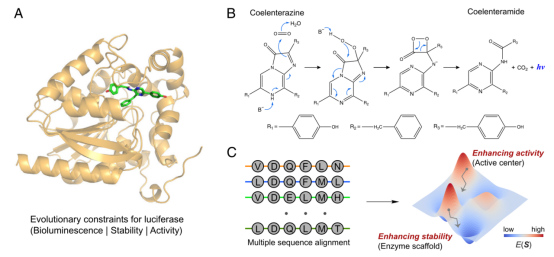
Before physical screening begins, the modern enzyme engineer utilizes the vast expanse of genomic data. Through computational enzyme discovery and mining, we can identify parental scaffolds that are most likely to succeed. This digital prospecting is further refined by AI-driven enzyme discovery and function prediction, which narrows down millions of sequences into a manageable pool of high-potential candidates.
For researchers exploring unknown biological niches, AI-guided metagenomic analysis and deep learning-based sequence mining have proven indispensable. These tools allow us to predict functional traits such as thermostability or substrate range before a single wet-lab experiment is performed, significantly increasing the “hit rate” of library construction.
II. Designing the Ultimate Enzyme Library
Once a target is identified, the next step is enzyme engineering and optimization. Depending on the project goals, several strategies may be employed:
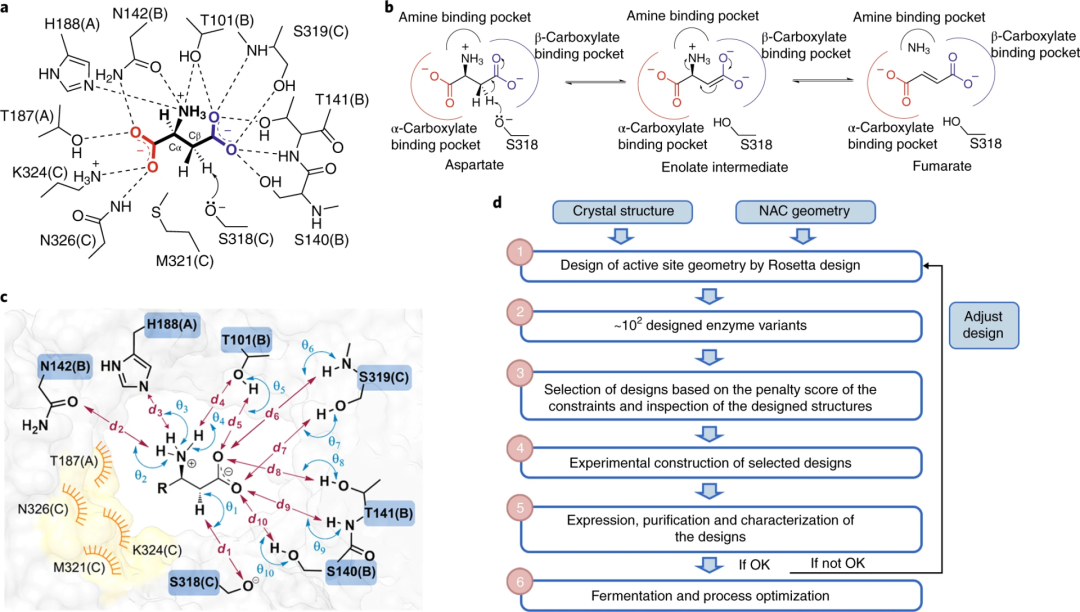
- Rational Design: Utilizing enzyme structural bioinformatics and modeling to pinpoint key residues in the active site.
- De Novo Design: Creating entirely new catalysts through enzyme rational design and de novo design.
- Focused Mutagenesis: Engaging in enzyme active site engineering or allosteric regulation design to alter selectivity.
The transition from design to physical reality requires enzyme library generation services. In a cell-free workflow, these libraries can be used as linear DNA templates, completely bypassing the need for time-consuming ligation and transformation steps.
III. High-Throughput Cell-Free Screening (HT-CFPS)
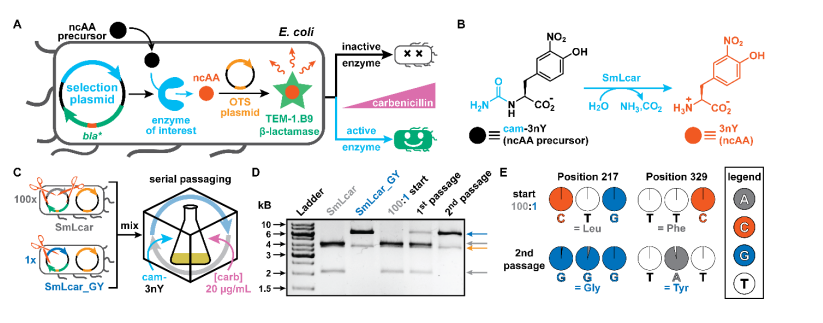
The true power of the HT-CFPS platform lies in its speed and parallelism. By using robotic liquid handling, enzyme high-throughput screening (HTS) services for evolution can evaluate thousands of mutants simultaneously. This is particularly effective when coupled with display technologies like mRNA display for enzyme engineering, which maintains the genotype-phenotype link in a cell-free format.
Week 1: From Concept to Validated Hit
Day 1-2: Library design via in silico enzyme candidate selection and DNA synthesis.
Day 3: Cell-free expression. 384-well plates are prepared where each well synthesizes a different variant.
Day 4-5: Comprehensive enzyme profiling. Real-time assays measure kinetics, stability, and specificity.
Day 6-7: Data analysis and selection of the next round of mutants.
IV. Deep Profiling: Beyond Just Activity
A “hit” in a screen is only useful if it meets the broader criteria of the industrial process. Our enzyme characterization and profiling services go deep into the biophysical properties of the evolved variants:
| Profiling Type | Focus Area | Service Link |
|---|---|---|
| Kinetic Profiling | $V_{max}$, $K_m$, $k_{cat}$ across various conditions | Enzyme Kinetic Profiling |
| Stability Profiling | Thermostability, pH tolerance, organic solvent resistance | Enzyme Stability Profiling |
| Substrate Profiling | Substrate promiscuity and enantioselectivity | Enzyme Substrate Profiling |
For pharmaceutical applications, understanding the target is vital. We offer specialized assays such as kinase and phosphatase profiling and protease and peptidase profiling to ensure the evolved enzyme integrates perfectly into the therapeutic pathway.
V. Scaling and Formulation: Industrial Integration
Success in the laboratory must translate to success in the fermenter. Once the best variant is chosen, it moves to integrated enzyme production and formulation services. This stage includes enzyme fermentation development and scale-up production.
To enhance the longevity of the biocatalyst in industrial reactors, we provide enzyme immobilization services and formulation stabilization. For complex chemical syntheses, enzyme cascade design allows multiple evolved enzymes to operate in a single pot, maximizing atom economy and reducing waste.
Accelerate Your Biocatalyst Development
Why wait months for screening results? Our HT-CFPS platform, combined with AI-driven discovery, provides the fastest route from genetic sequence to industrial enzyme.
For a complete technical overview of our capabilities, please explore our enzyme expression and purification and structural bioinformatics resources.