
In the last few years, the field of biotechnology has witnessed an unprecedented convergence of generative artificial intelligence and synthetic biology. We have moved from a “discovery” era to a “design” era. Tools like AlphaFold2, RoseTTAFold, and more recently, diffusion-based models like RFdiffusion, have unlocked the ability to generate millions of novel protein sequences with high theoretical precision. However, a significant gap remains: how do we validate these “in silico” wonders in the “wet lab” at a speed that matches AI’s output? This is where computational protein design services must bridge the gap through experimental high-throughput validation.
The traditional bottleneck is cell-based expression. Relying on living organisms to test thousands of AI-generated variants is slow, biased by host metabolism, and often fails due to toxicity. The solution is the integration of AI with high-throughput cell-free protein expression (HT-CFPS), creating a seamless closed-loop system for protein engineering.
The AI-Biology Feedback Paradox
The Conflict: Modern AI models can propose 10,000 potential protein variants in hours. Yet, a standard laboratory throughput using E. coli transformation and culture might only validate 10–50 variants per month.
This mismatch creates a data desert. AI needs experimental feedback to improve its accuracy—a process known as active learning. Without a high-velocity validation engine, AI-driven protein design remains a speculative exercise. The cell-free approach breaks this paradox by eliminating the “cloning and culturing” phase entirely, shifting the timeline from months to days.
I. Generative AI: From Sequence Mining to De Novo Architecture
The first stage of modern protein engineering involves defining the target function. Whether designing a binder for a viral spike protein or a more efficient industrial enzyme, researchers now employ de novo protein design strategies. Unlike traditional methods that modify existing natural proteins, de novo design builds proteins from scratch, often utilizing “protein language models” (pLMs) that understand the grammar of folding.
1. Diffusion Models and Inverse Folding
Diffusion models have revolutionized structure generation by “denoising” random clouds of points into biologically plausible backbones. Once a structure is designed, “inverse folding” algorithms like ProteinMPNN assign an amino acid sequence that will fold into that specific shape. This allows for rational protein design at a scale previously thought impossible.
2. Optimizing for Expression
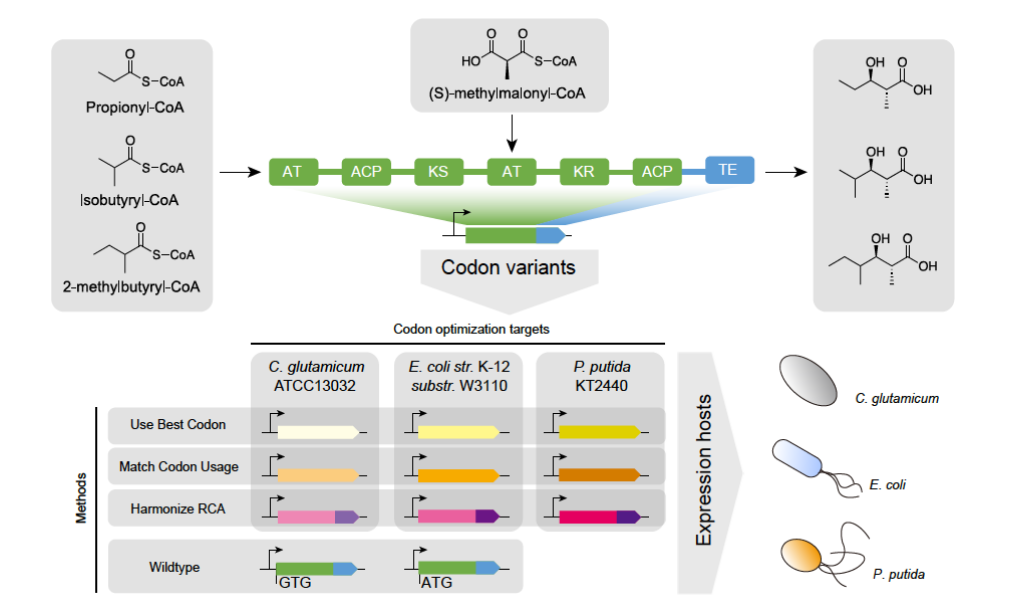
Even the most sophisticated AI design may fail if the sequence is poorly optimized for the translational machinery. Advanced workflows now incorporate codon optimization for protein expression as a standard step within the AI pipeline. This ensures that the generated sequences are not just theoretically stable, but practically expressible in a cell-free lysate.
II. Cell-Free Protein Synthesis: The Rapid-Fire Validation Engine
Once the AI generates a library of sequences, they must be synthesized. In a cell-free system, DNA templates (often as linear PCR products) are added to a reaction mixture containing ribosomes, tRNAs, and energy regeneration systems. This is the core of cell-free protein expression technology.
1. Speed and Parallelization
Because there is no need to maintain cellular life, reactions can be performed in 384-well plates or microfluidic droplets. A single HT-CFPS run can produce thousands of variants in under 24 hours. This high-velocity output provides the necessary data volume to feed back into AI training loops, creating a “virtuous cycle” of design and verification.
2. Bypassing Toxicity
Many AI-designed proteins, particularly those intended to be antimicrobial or membrane-disrupting, are toxic to living host cells. In a cell-free environment, there is no host cell to kill. This allows for the unhindered synthesis of membrane proteins or potent toxins, which are frequently the targets of cutting-edge drug discovery.
III. Closing the Loop: High-Throughput Screening and Active Learning
Validation doesn’t end with expression; the functional performance of the designed protein must be measured. Our high-throughput cell-free protein screening platform integrates online assays—such as fluorescent binding assays, enzymatic activity tests, or mass spectrometry—directly with the synthesis stage.
| Phase | AI-Only Approach | Cell-Free Integrated Approach | Advantage |
|---|---|---|---|
| Design | RFdiffusion / ProteinMPNN | RFdiffusion + Expression Prediction | Practicality |
| Synthesis | Synthesize & Clone (Weeks) | Linear DNA + HT-CFPS (Hours) | 100x Speedup |
| Validation | Low-throughput (1-10 variants) | High-throughput (1,000+ variants) | Statistical Power |
| Optimization | Human-led intuition | AI-led Active Learning | Closed-loop Auto-pilot |
Case Study: Designing Ultra-High Affinity Nanobodies
A research team used a generative model to design a library of 5,000 nanobody variants targeting a difficult-to-drug GPCR. Using traditional CHO cell expression, this project would have taken over a year to screen. By utilizing HT-CFPS, they synthesized and screened all 5,000 variants in two weeks. The binding data was then used to “fine-tune” the AI model, which in a second round of design produced a binder with picomolar affinity.
IV. Future Horizons: Toward Autonomous Protein Engineering
As AI models become more adept at predicting not just structure but also dynamics and PTMs (post-translational modifications), the demand for diverse lysates will grow. Beyond the standard E. coli systems, specialized lysates like HEK293 or CHO-based systems will be required to validate designs intended for human therapeutic use. Furthermore, the integration of liquid-handling robots with AI controllers will lead to “Self-Driving Labs” (SDLs), where the system designs, builds, tests, and learns autonomously.
V. Conclusion: The New Standard in Protein R&D
The combination of AI and cell-free screening represents the most significant shift in protein engineering since the invention of recombinant DNA technology. By removing the biological barriers to expression and the logistical barriers to speed, we are entering an era where custom-designed proteins can be moved from a computer screen to a clinical assay in record time.
Accelerate Your AI-Driven Protein Projects
Bridge the gap between in silico design and in vitro reality. Our HT-CFPS platform is ready to validate your thousands of AI-generated variants with industry-leading speed and accuracy.
Note: For researchers focused on non-standard architectures, we also offer specialized cell-free display screening services for library sizes exceeding 10^10 variants.